Don’t Believe Everything You Think – Honest Review of the Book That Stops Overthinking
Discover an honest review of Don’t Believe Everything You Think—what it teaches, who it helps, and whether it’s worth buying if you overthink or feel anxious.
MIND-BODY PRACTICES (MEDITATION, BREATHWORK, ETC.)
12/12/20255 min read


Don’t Believe Everything You Think: An Honest Review of the Book That Helped Me Stop Overthinking
Don’t Believe Everything You Think isn’t a loud book.
It doesn’t promise instant happiness.
It doesn’t overwhelm you with exercises, science jargon, or rigid rules.
And honestly? That’s exactly why it works.
If you’ve ever felt stuck in your own head—looping the same thoughts, replaying worries, or feeling exhausted by a mind that never seems to rest—this book speaks directly to that experience. Chronic overthinking is closely linked to anxiety and emotional exhaustion, which is why so many readers seek gentler mental tools. Not by telling you to fix yourself, but by helping you see something most of us were never taught:
Thoughts are not truth. And suffering often comes from believing them.
The Hidden Reason So Many of Us Feel Stuck
Most people assume their suffering comes from circumstances:
relationships
money
health
the past
But this book gently introduces a different idea:
👉 Suffering isn’t caused by what happens to us — it’s caused by how much we believe our thoughts about what happens. Psychologists have long noted that thoughts are automatic mental events, not facts — a concept widely discussed in modern psychology.
That might sound simple, but when you actually sit with it, it changes everything.
The author doesn’t encourage toxic positivity or forced mindset shifts. Instead, he explains how peace naturally shows up when you stop identifying with every thought your mind produces.
And if you’ve tried affirmations, journaling, therapy, or self-help books that made you feel like you were doing something wrong when they didn’t work — this perspective can feel incredibly relieving.
What This Book Actually Teaches (Without the Fluff)
This is not a workbook.
It’s not a “10 steps to happiness” guide.
Instead, the core lessons focus on:
Why thoughts are automatic and impersonal
How believing thoughts creates emotional pain
Why you don’t need to control your mind to feel peace
How clarity comes naturally when you stop fighting yourself
It’s written in simple language, short sections, and calm explanations. You can read a few pages at a time without feeling overwhelmed — which makes it especially helpful if you’re mentally tired or emotionally drained. The ideas in this book closely align with mindfulness-based awareness, which focuses on observing thoughts rather than controlling them.
What I Honestly Liked About This Book
✔️ It feels grounding, not preachy
✔️ No pressure to “fix” yourself
✔️ Easy to read when your brain is tired
✔️ Reframes anxiety and overthinking in a gentle way
✔️ Pairs well with meditation or mindfulness (but doesn’t require it)
It helped me notice how often I was believing stressful thoughts without questioning them — and how much lighter things felt when I didn’t.
A Few Honest Limitations (Because No Book Is for Everyone)
I want to be transparent, because trust matters more than a sale.
This book may not be ideal if:
you want structured daily exercises
you prefer heavy neuroscience or research citations
you’re looking for a step-by-step program
This book is more about insight and awareness than action plans. For some readers, that’s perfect. For others, it may feel subtle.
Who This Book Is Best For
This book is a great fit if you:
struggle with overthinking or anxiety
feel mentally exhausted from “working on yourself”
want peace without forcing positivity
resonate with mindfulness or awareness-based ideas
want something calming instead of motivating
If you’re craving mental quiet rather than motivation — this book delivers that.
What Other Readers Are Saying
Many readers describe this book as:
“life-changing but simple”
“the first time something actually clicked”
“the calmest I’ve felt in years”
It consistently receives high ratings because it meets people where they are, instead of telling them who they should become.
Should You Buy Don’t Believe Everything You Think?
If you’re looking for:
relief from constant mental noise
a gentler way to relate to your thoughts
a perspective shift rather than another self-help checklist
Then yes — this book is absolutely worth reading.
👉 You can check current pricing and reader reviews here: Don't Believe Everything You Think
Final Thoughts
This book didn’t try to change who I am.
It helped me stop fighting myself.
And sometimes, that’s the most powerful shift of all.
If your mind has been heavy lately — this might be the quiet relief you didn’t realize you were allowed to have.
Frequently Asked Questions
What is Don’t Believe Everything You Think about?
This book explains how emotional suffering often comes from believing our thoughts rather than the situations themselves. It teaches awareness instead of mindset control, helping readers experience mental clarity and calm.
Is Don’t Believe Everything You Think worth reading?
If you struggle with overthinking, anxiety, or mental exhaustion, many readers find this book helpful because it offers relief without forcing positivity or complicated exercises.
Does Don’t Believe Everything You Think help with anxiety?
The book doesn’t claim to treat anxiety, but many readers report feeling calmer after learning how to stop identifying with anxious thoughts.
Is this book practical or more philosophical?
It leans more toward insight and awareness than step-by-step techniques. If you prefer gentle perspective shifts over action plans, this book may resonate deeply.
Who should not buy Don’t Believe Everything You Think?
Readers looking for structured exercises, daily worksheets, or science-heavy explanations may prefer a different type of self-help book.
Is Don’t Believe Everything You Think beginner-friendly?
Yes. The language is simple, the chapters are short, and it’s easy to read even when you’re mentally tired or overwhelmed.
Where can I buy Don’t Believe Everything You Think?
The book is available online through major retailers. You can check current pricing and reviews using the affiliate link included in this post.
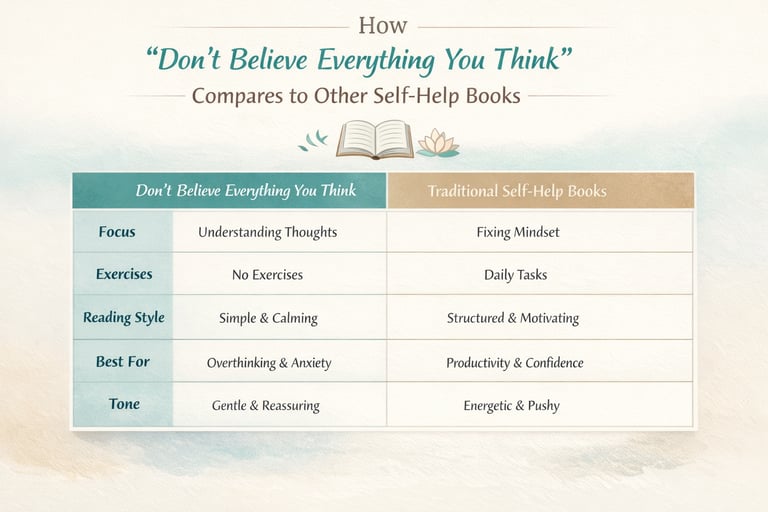
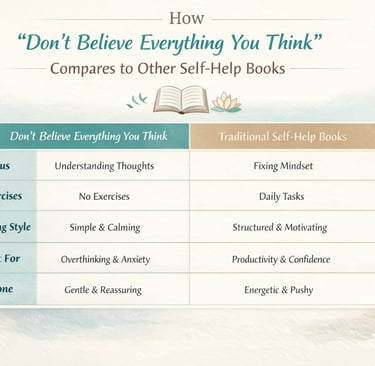




This visual comparison shows why this book resonates with readers seeking calm instead of pressure.
I only recommend books I’ve personally read and found genuinely helpful.
This is an affiliate link, which means I may earn a small commission at no extra cost to you