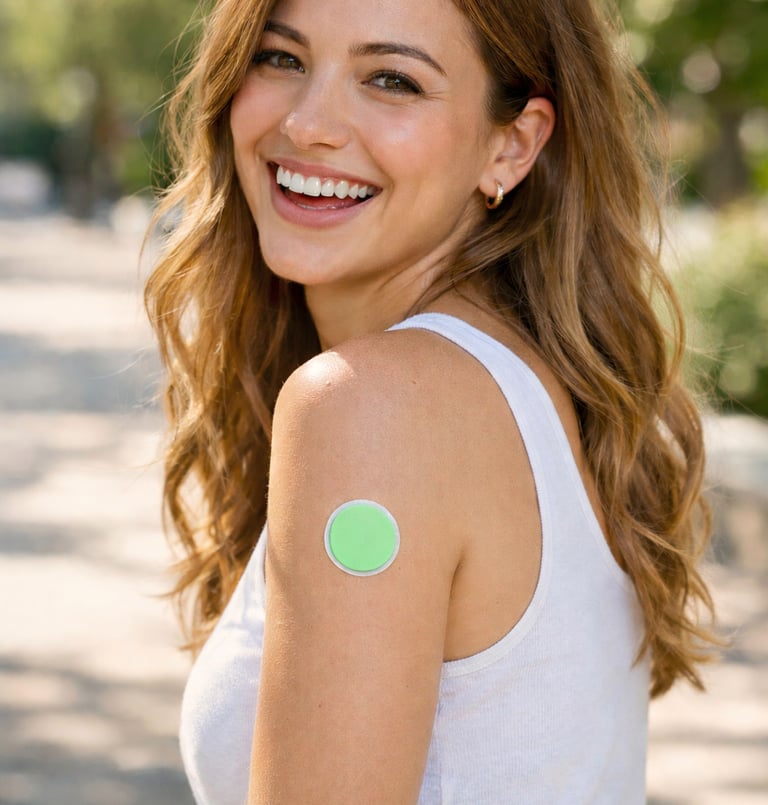
Dopamine Patches for Focus & Mood (Honest Review + Science-Backed Guide)
Curious if dopamine patches really work for focus, mood, and stress support? This honest review breaks down ingredients (Mucuna pruriens & 5-HTP), science, safety, pros/cons, and real-world results to help you decide.
STRESS & MOOD SUPPORTFEATURED
12/14/20256 min read
Dopamine Patches for Focus & Mood: Benefits, How They Work, and an Honest Review
Do dopamine patches really work? If you’ve found yourself asking that question, chances are your days feel mentally heavier than they used to. Brain fog lingers no matter how much sleep you get. Motivation feels slippery. Stress turns simple tasks into something that feels overwhelming before you even begin.
You’re not lazy. You’re not broken. And you’re definitely not alone.
For many people, this combination of low focus, low mood, and constant mental load comes down to depletion — nervous system fatigue layered on top of chronic stress. When coffee leads to jitters, energy drinks crash hard, and yet another supplement bottle feels exhausting, the idea of a simple stick-on patch that quietly supports you throughout the day can sound genuinely appealing.
This post takes a clear, balanced, and honest look at dopamine patches for focus and mood — specifically Extra Strength Dopamine Patches with Mucuna & 5-HTP — including what’s promising, what’s uncertain, who they may help most, and where expectations should stay realistic.
Why Focus and Mood Feel So Hard Lately
When your attention drifts and your mood dips, it’s easy to internalize it as a personal failure. In reality, it’s often biology colliding with burnout.
Many people are dealing with:
Chronic stress that disrupts sleep, appetite, and emotional regulation
Mental overload that makes concentration feel fragile or inconsistent
Reduced motivation when the nervous system is already maxed out
Reliance on quick fixes (caffeine, sugar, scrolling) that help briefly — then backfire
This is exactly why non-stimulant, calm-focus support tools are getting more attention. People aren’t looking to push harder — they’re looking to feel steadier.
If focus challenges are ongoing for you, pairing supplements with gentle daily habits and supportive tools can often be more effective than relying on one solution alone.
What Are Dopamine Patches (and Why People Are Curious About Them)
Dopamine patches are transdermal patches designed to deliver ingredients through the skin over several hours.
The appeal is straightforward:
No pills or capsules
Marketed as “steady release” rather than spikes
Convenient for people with sensitive stomachs or supplement fatigue
It’s important to be honest here: while transdermal delivery is well-established for certain medications, supplement patches are more complex. Whether an ingredient can reliably absorb through the skin depends on molecular size, formulation, dose, and skin variability.
That means results can differ significantly between products — and between people.
Dopamine Patch Ingredients Explained
Mucuna Pruriens (Natural Source of L-DOPA)
Mucuna pruriens contains levodopa (L-DOPA), which the body uses to produce dopamine — a neurotransmitter involved in motivation, focus, and reward.
L-DOPA is well-studied in neurological contexts (particularly Parkinson’s disease), and Mucuna has demonstrated biologically meaningful activity. However, when used for mood support:
Potency varies widely across supplements
Much of the mood-related research is still emerging
Human clinical trials specific to mood are limited
In short: Mucuna has a plausible mechanism, but it’s not a guaranteed mood solution.
5-HTP (Serotonin Precursor)
5-HTP helps the body produce serotonin, which plays a role in:
Mood stability
Emotional regulation
Sleep rhythms
Older clinical studies suggested potential mood benefits compared to placebo, though many had small sample sizes. Newer reviews continue to explore its role, but results vary widely by individual context.
It’s best thought of as supportive, not corrective.
How Dopamine Patches Are Supposed to Work
Think of your brain like a phone running too many apps in the background.
Dopamine supports motivation, follow-through, and focus
Serotonin supports calm mood, emotional steadiness, and sleep balance
These patches aim to support both systems by providing precursors associated with each pathway — ideally in a smoother, lower-intensity way than stimulants.
The biggest unknown remains transdermal absorption. That’s where promise meets uncertainty.
Dopamine Patch Pros and Cons (What the Evidence Actually Says)
Potential Benefits (Pros)
5-HTP has some clinical research supporting mood-related benefits
Mucuna’s L-DOPA activity is biologically meaningful
Convenient, low-effort format for daily use
Non-stimulant approach to focus and mood
Limitations and Uncertainties (Cons)
Limited high-quality evidence for supplement patches specifically
Skin is an effective barrier; absorption is not guaranteed
Effectiveness depends heavily on formulation and individual skin differences
Many commercial products lack published clinical trials
Bottom line: dopamine patches may feel helpful for some people — but expectations should stay realistic.
Are Dopamine Patches Safe?
For many healthy adults, dopamine patches are generally well-tolerated, but safety depends on your personal health context.
Important considerations:
Patch adhesives may cause skin irritation or contact dermatitis
5-HTP can interact with serotonergic medications (SSRIs, SNRIs, MAOIs)
Using 5-HTP alongside mood medications may increase serotonin-related risks
Always consult a healthcare provider if you’re on psychiatric medications
Who Should Not Use Dopamine Patches
Dopamine patches may not be appropriate if you:
Take antidepressants or other serotonergic medications
Are pregnant or breastfeeding
Have a history of bipolar disorder or serotonin sensitivity
Have significant skin sensitivities or allergies
How Long Do Dopamine Patches Last?
Most supplement patches are marketed for all-day wear, but real-world duration varies.
Factors that affect perceived duration:
Individual absorption
Patch placement and skin condition
Wear time and consistency
If a patch works for you, effects are usually subtle and most noticeable during the wear window — not dramatic or immediate.
Who Might Benefit Most
Dopamine patches may be worth exploring if you:
Feel mentally drained or emotionally overloaded
Experience brain fog but want to avoid stimulants
Prefer gentle wellness tools over aggressive productivity hacks
Want steady support during stressful seasons
Value consistency and subtle improvement over quick results
They tend to align well with a soft-life, nervous-system-friendly approach to wellness.
Real User Experiences (What People Actually Notice)
Across wellness communities, user experiences are typically subtle rather than dramatic.
Common themes include:
Feeling slightly more mentally steady
Less background tension or overwhelm
Easier task initiation
No jittery stimulation
Some user notice clear benefits
Other feel little difference
This variability is completely normal with supplements.
Final Verdict: Are Dopamine Patches Worth Trying?
Dopamine patches are not a miracle — but they aren’t pure hype either.
For the right person, they can offer gentle, low-effort support that fits naturally into a broader wellness routine. They work best when viewed as a complement to healthy habits, not a replacement for them.
If you approach dopamine patches with realistic expectations, pay attention to how your body responds, and prioritize safety — they can be a reasonable tool to experiment with.
Sometimes wellness doesn’t come from doing more.
Sometimes it comes from choosing support that feels calm, consistent, and kind to your nervous system.
Your Happiness is one patch away...
So Dopamine patches work for Focus and Mood?
Benefits of Dopamine Patches ( No Caffeine crash)
Mood + Focus Wellness: Dopamine Patch Guide




Find More Here
👉 “If you’re curious and want to try dopamine patches safely, check out our recommended option — and always talk to your provider.” Dopamine Patches

❓ Frequently Asked Questions About Dopamine Patches
Do dopamine patches really work?
Dopamine patches may offer subtle support for some people, especially when it comes to feeling more emotionally steady or slightly more motivated. However, results vary widely. Some users notice gentle improvements, while others feel little to no change. Expectations, individual body chemistry, and overall lifestyle all play a role.
How long do dopamine patches take to work?
Most people who notice effects describe gradual changes rather than immediate results. Some report feeling a difference within a few hours, while others only notice subtle shifts after several days of consistent use — if at all.
Are dopamine patches safe to use daily?
Dopamine patches are generally marketed as wellness supplements, but safety depends on the ingredients and your individual health situation. If you’re taking medications that affect mood or neurotransmitters, it’s important to talk with a healthcare provider before using them regularly.
Can dopamine patches replace medication or supplements?
No. Dopamine patches should not replace prescribed medications or professional mental health care. They’re best viewed as a complementary wellness tool rather than a treatment.
Do dopamine patches work better than capsules or gummies?
Some people prefer patches because they avoid digestion, while others find traditional supplements more noticeable. There’s limited research comparing delivery methods, so effectiveness often comes down to personal preference and how your body responds.